According to the latest industry report released by Boyan Consulting, China's fuse holder industry continues its steady expansion, reaching a market size of 4.86 billion yuan in 2025, a year-on-year increase of 7.3%. It is projected to further climb to 5.21 billion yuan in 2026, maintaining a compound annual growth rate of over 6.5%, making it one of the most promising sub-sectors in the low-voltage electrical field.
Currently, the growth momentum of the fuse holder industry mainly stems from demand release in downstream high-growth sectors. New energy power generation, energy storage systems, high-voltage power distribution modules for electric vehicles, and smart meters are the core driving forces. In particular, the penetration rate of fuse holders with high breaking capacity, wide temperature range adaptability, and UL/IEC dual certification has significantly increased in photovoltaic inverters and energy storage BMS protection circuits. Data shows that the increase in domestic photovoltaic installations in 2025 significantly boosted the demand for fuse holders, with the photovoltaic and energy storage sectors alone contributing approximately 2.26 billion yuan to the market size, accounting for nearly half of the total industry size.
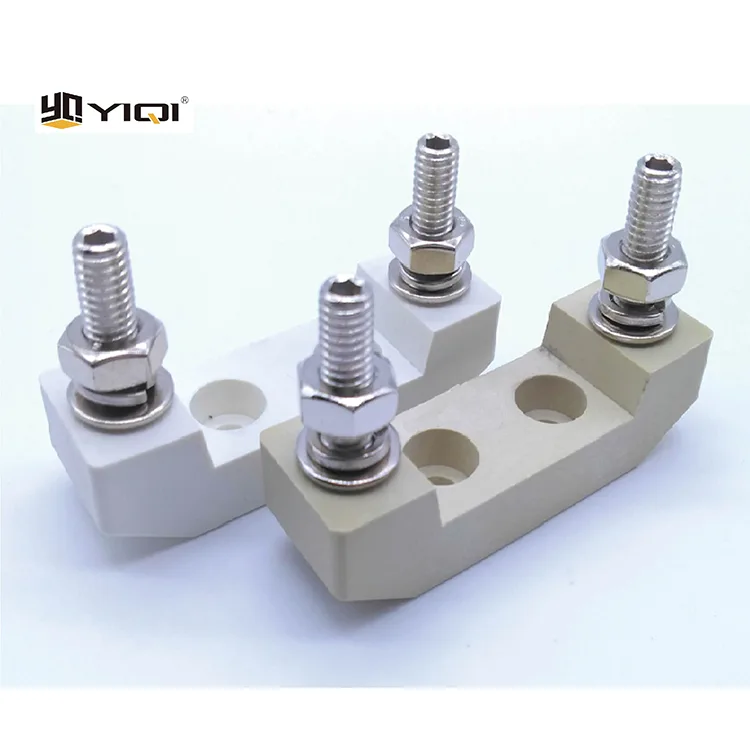
Technological upgrades have become the core competitive advantage in the industry. Leading companies are focusing on innovation in material formulation and structural design. Ceramic-cased fuse holders, with their high reliability, now account for 58.2% of the market and are widely used in demanding applications such as photovoltaics and energy storage. Plastic-cased and metal-cased fuse holders are respectively targeting niche markets such as home use, industrial control, and rail transportation, forming a differentiated market strategy. Meanwhile, the trend towards intelligent upgrades is evident. The shipment share of intelligent fuse holders with temperature sensing capabilities and remote status feedback is expected to increase to 28.5% in 2026, a 6.4 percentage point increase from 2025. Their unit price is more than 40% higher than traditional products, driving the industry towards "sensing + execution" composite components.
The market structure exhibits characteristics of concentrated leading companies and polarization. In 2025, the top five companies in the industry held a combined market share of 63.8%, an increase of 2.9 percentage points from the previous year. Leading companies such as Zhejiang Chint, Xiamen Hongfa, and Shanghai Liangxin maintained gross profit margins above 35% due to their multiple international certifications, core technology barriers, and strong customer relationships. Meanwhile, smaller manufacturers, lacking technological advantages, generally had gross profit margins below 22% and faced pressure to clear excess capacity. Furthermore, the export market performed strongly, with domestic fuse holder exports accounting for 18.4% in 2025, and projected to rise to 21.1% in 2026. Southeast Asia and Latin America became the core markets for export growth, benefiting from the construction of local photovoltaic power plants and grid upgrade projects.
Industry insiders stated that with the advancement of the National Action Plan for High-Quality Development of the Basic Electronic Components Industry (2025-2027), the localization rate of fuse holders, as a key basic component for protection, will further increase. In the future, the industry will continue to focus on high-end, intelligent, and customized upgrades, and driven by both new energy and industrial automation, it is expected to achieve higher-quality growth.
We use cookies to offer you a better browsing experience, analyze site traffic and personalize content. By using this site, you agree to our use of cookies. Privacy Policy